

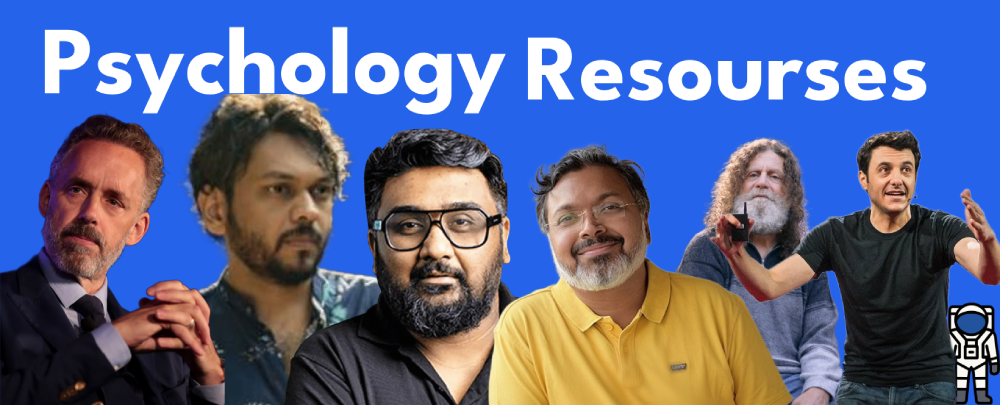
How to Study Psychology on Your Own — From Zero (With No Background) (Part 3)
This post is about other resources for learning psychology on your own. The last post was about books, which you can check here.
In the last post, I told you about books, and before that, I told you about the Lecture series. These videos I am going to talk about are some podcasts, YouTube videos, movies, etc., which I can’t fit into other categories. This might be the last article in this series. In this article, I am also going to tell you what kind of topics they will discuss, and what you have to learn to know these things and understand them better. I am going to share some people who understand human behaviour and whom I follow for better insights. But before starting this, the same
Disclaimer – this article is just a suggestion, a guide, not a gospel.

Btw, while watching the Lecture series and reading books, you are going to need some videos to understand some complex topics. So, for that (as I am a high-in-consciousness person), I have created a playlist (since the first day of learning ) on YouTube for essential videos. This is the link to the playlist. This is going to save you a lot of time.
Now, come to the topic that you have to understand for understanding human behaviour. Three things you need to remember. All the things in this world fall into three categories.
- Subjective reality/fiction (nobody’s truth, everybody knows it’s a story)
- Objective reality /science (everybody’s truth, everybody knows it happens)
- Intersubjective reality /mythology(somebody’s truth, some people agree, some don’t)
Now, when learning human behaviour, your primary focus is going to be on intersubjective reality. It changes the whole game. Humans are humans due to this intersubjective reality.

Now let me explain more – when you study science, pure science like physics, chemistry, maths, biology, computer science, it’s pure logic and true for everybody on this planet. When you read novels, watch movies, listen to songs, and watch plays, it’s all fiction. Full imagination. But in between is mythology. It’s the tricky part. Here you find something that doesn’t make sense to you but makes sense to others, and vice versa. These are all humans’ shared values of humans, like money, country, law, institutions, religion, religious books, government, etc. This is confusing, and this part is also the most mysterious and important. The whole human civilisation is based upon this. You can see from the beginning till today. All the conflict that exists in this world today are due to this inter-subjective reality.

Apart from this-
Here is a YouTube playlist that I made over the year while I was learning human behaviour. Watch these videos if you are interested in learning psychology topics, or if you are a beginner just starting out.
Now, come to the main part, the Topic that needs to be covered to understand it better ….
1. Neurobiology & Brain Science
• Study how the brain and nervous system influence behavior (e.g., hormones, neurotransmitters, brain regions).
• Example: Why a person acts aggressively after a stressful event might involve amygdala activation or cortisol release.
• Source: Behave by Robert Sapolsky emphasizes the importance of looking at what happens a second before a behavior, hours before, and even millions of years before, from neurons to evolution.
2. Genetics and Evolutionary Psychology
• Understand how evolution shaped behavior like mating, cooperation, aggression, etc.
• Example: Evolutionary motives like “mate selection” explain why certain beauty standards are universally appealing.
• Source: Evolutionary Psychology in the Business Sciences outlines how our evolved minds solve ancient problems like status, kinship, and threats.

3. Developmental Psychology
• Studies behavior across life stages: prenatal, childhood, adolescence, adulthood.
• Example: How early attachment affects future relationships (attachment theory).
• Covered in The Psychology Book in detail with thinkers like Piaget, Bowlby, and Ainsworth.
4. Behavioral Psychology (Behaviorism)
• Focuses on how the environment shapes observable actions (stimulus-response).
• Think Pavlov’s dogs and Skinner’s operant conditioning.
• Example: Why you check your phone every time it buzzes—it’s learned behavior.
• Behaviorism shaped the field of experimental psychology.
5. Cognitive Psychology
• Studies mental processes like perception, memory, and decision-making.
• Important for understanding irrational thinking, biases, and problem-solving.
• Example: Why you remember emotionally intense moments better than neutral ones.
• Discussed in-depth with figures like Aaron Beck, Daniel Kahneman.

6. Social Psychology
• Explores how people influence and relate to one another in groups and society.
• Example: Why people conform in groups (Asch’s experiment) or obey authority (Milgram’s study).
• Social psychology dives into conformity, prejudice, empathy, and social norms.
7. Personality Psychology
• Studies consistent traits and individual differences (e.g., Big Five traits).
• Helps explain how and why people behave differently in the same situation.
8. Abnormal Psychology & Mental Health
• Focuses on disorders like depression, anxiety, and schizophrenia.
• Also includes therapy models: CBT, psychoanalysis, and humanistic approaches.
• Example: How childhood trauma can lead to dissociative behavior.

9. Motivation & Emotion
• Understand intrinsic/extrinsic motivation, biological drives, and emotional regulation.
• Example: Why we chase goals, feel guilt, fall in love, or freeze in fear.
10. Philosophy of Mind and Consciousness •
Deep questions: What is the self? Do we have free will? Is the mind different from the brain?
• Thinkers like Descartes, Kierkegaard, and modern cognitive philosophers.
11. Cultural and Ecological Influences
• Human behavior can’t be separated from the context of culture, society, and ecology.
• Example: Norms around eye contact or emotional expression vary by culture.
12. Supernormal Stimuli & Primal Brain Hijack
• Some modern behaviors (overeating, porn addiction, doomscrolling) hijack ancient instincts evolved for survival.
• Coined by Niko Tinbergen and explained beautifully by Deirdre Barrett in Supernormal Stimuli.
• Example: Junk food is sweeter than real fruit → brain says “this is more valuable,” even if it’s not.
• Relevance: Helps explain addiction, consumer behavior, and media manipulation.
• Covered in: Supernormal Stimuli

13. Dark Psychology & Manipulation Tactics
• Understanding how manipulation works: gaslighting, love bombing, isolation, and emotional blackmail.
• Essential if you’re studying political cults, toxic relationships, propaganda, or influence.
• Covered in: Dark Psychology, DARK PSY MANIPULATION, etc.
14. Tribalism, Group Identity, and Ingroup-Outgroup Bias
• Us vs Them psychology. Explains nationalism, racism, fan wars, and cult mentality.
• Based on evolution: Ingroup = safety, Outgroup = threat.
• Tim Urban’s The Story of Us and Sapolsky’s Behave explore this in depth
15. Embodied Cognition & Mind-Body Feedback Loops
• We don’t just think with the brain — the body influences thought. (e.g., posture affects confidence).
• Includes the facial feedback hypothesis, the gut-brain axis, and heart rate affecting anxiety.
• Explored in emotion and trauma studies
16. Gestalt & Systems Thinking
• The whole is more than the sum of its parts.
• Useful for seeing hidden patterns in human behavior, like family dynamics, social systems, and institutions.
• Especially powerful in therapy, organizational behavior, and education.

17. Mirror Neurons & Social Brain
• Our brains are wired to simulate the experience of others. This underpins empathy, mimicry, teaching, and even envy.
• Can also be hacked by influencers, marketers, and politicians.
18. Moral Psychology and Free Will Debate
• Are people truly “bad”? Or shaped by context?
• People punish others for wrongs even if they believe in determinism — why?
• This area explores morality, justice, revenge, and why we do good or evil.
19. Spiritual Psychology / Meaning-Making
• Humans are the only species that ask, “Why am I here?”
• This drives religion, storytelling, existentialism, and identity construction.
• Viktor Frankl’s “Man’s Search for Meaning” is a key text.
• Religion for Non-Religious People (Tim Urban) beautifully explains this paradox
20. Cognitive Biases & Heuristics
• People don’t think rationally.
• Instead, we use mental shortcuts that can lead to massive errors in judgment: Confirmation bias, Availability heuristic, Halo effect, Loss aversion, Status quo bias.
• Covered in the work of Daniel Kahneman (Thinking, Fast and Slow)

21. Attachment & Trauma Frameworks
• Behavior isn’t just nature/nurture — trauma restructures the nervous system.
• Childhood attachment style (secure/insecure/avoidant) affects adult relationships, anxiety, and intimacy.
• Modern therapy is now trauma-informed for this reason.
22. Role of Storytelling, Myth, and Metaphor in Human Cognition
• Humans make sense of the world narratively, not analytically.
• Myth, metaphor, and story shape identity and values more than logic.
• Joseph Campbell, Carl Jung, and even advertisers use this power.
• Tim Urban’s metaphors, Disney, Inception, The Matrix — all shape belief systems.
23. Game Theory & Strategy (Tit-for-Tat, Prisoner’s Dilemma)

• Helps understand cooperation vs betrayal, reciprocity, and competition.
• Sapolsky uses this to explain vampire bats and human politics.
24. Probability, Risk, and Decision-Making under Uncertainty
• How people make decisions when outcomes are uncertain or risky (finance, war, love, health).
• Ties into fear, control, and magical thinking.
25. Media, Technology & Behavioral Engineering
• Algorithms shape desire, identity, and memory.
• Humans now outsource thinking to Google, memory to Instagram, and connection to screens.
• This rewires human behavior in real-time.
Blog that needs to be read & why
1. Wait But Why by Tim Urban (must)
Why read it:
• The Story of Us – tribalism, morality, ego, group identity.
• The Cook and the Chef – originality and creative behavior.
• How to Pick a Life Partner – game theory meets love.
• AI, Death, Religion – existential psychology and narrative.
Lex Fridman has a podcast with him. Listen to that too.
2. LessWrong
Why read it:
• Rationality, cognitive bias, game theory, decision-making.
• Topics like akrasia (why we don’t do what we want to), Bayesian thinking, and belief updating.
3. The Elephant in the Brain (by Kevin Simler & Robin Hanson)
https://www.elephantinthebrain.com
Why read it:
• Hidden motives in everyday behavior (charity, religion, conversation, art, education).
• Human behavior isn’t as noble as it seems.
4. Fs blog
Why read it:
• Mental models, decision-making, systems thinking, leadership.
• Learn to think like Buffett, Munger, Kahneman.
5. Melting Asphalt by Kevin Simler (mentioned earlier )
https://meltingasphalt.com (my personal favourite, he leaves you with more questions than he answers)
Why read it:
• “Social Status: Down the Rabbit Hole”
• “The Life Cycle of Software Objects”
6. The Art of Manipulation (Medium Series)
https://medium.com/tag/manipulation
Why read it:
• Explains tactics like gaslighting, mirroring, and love bombing.
Great for connecting your “Dark Psychology” reading with real-life tactics.
7. Ness Labs by Anne-Laure Le Cunff
Why read it:
• Mental health meets neuroscience meets learning.
• Topics like neuroplasticity, growth mindset, and cognitive rest.
This is basically for integrating emotion + learning + brain hacks.
8. Gad Saad’s Psychology Today Blog (real-life application of what you read)
https://www.psychologytoday.com/us/blog/homo-consumericus
Why read it:
• Evolutionary psychology applied to consumer behavior, sexuality, and morality.
Listen to his podcast too with Joe Rogan.
9. James Clear (Author of Atomic Habits), if you have extra time
Why read it:
• Habit formation, behavior change, identity shifts.
Psychology made practical, not just theoretical.
10. Marginal Revolution (Tyler Cowen & Alex Tabarrok) (real-life application of what you read)
https://marginalrevolution.com
Why read it:
• How behavior intersects with markets, society, and incentives.
how human behavior plays out in economics and policy.
12. Slate Star Codex / Astral Codex Ten (Scott Alexander)
https://astralcodexten.substack.com
Why read it:
• Long, deep dives into psychology, psychiatry, rationalism, trauma, and AI ethics.
Dostoevsky meets cognitive science.
13. Paul Graham’s Essays
Why read it:
• Essays on taste, fear, and how to think originally.
Explore why people don’t follow their curiosity.
People that you need to follow –
1. Jonathan Haidt – Moral Psychology + Tribalism

• The Righteous Mind, The Coddling of the American Mind
• Studies the psychology behind political division, religion, and morality.
• Why follow: Understand why good people disagree so strongly.
•twitter- @JonHaidt
2 . Tim Urban – Existential Psychology + Systems Thinking

• Wait But Why blog
• The Story of Us (must-read on group behavior, ego, identity)
• Why follow: Writes about human nature using stick figures, jokes, and cosmic questions.
• twitter- @waitbutwhy
3. Gad Saad – Evolutionary Psychology + Consumer Behavior

• The Consuming Instinct, The Parasitic Mind
• Why follow: How mating, status, and evolution affect business, politics, and social behavior.
• twitter-@GadSaad
4. Jordan Peterson – Personality, Myth, Order vs Chaos
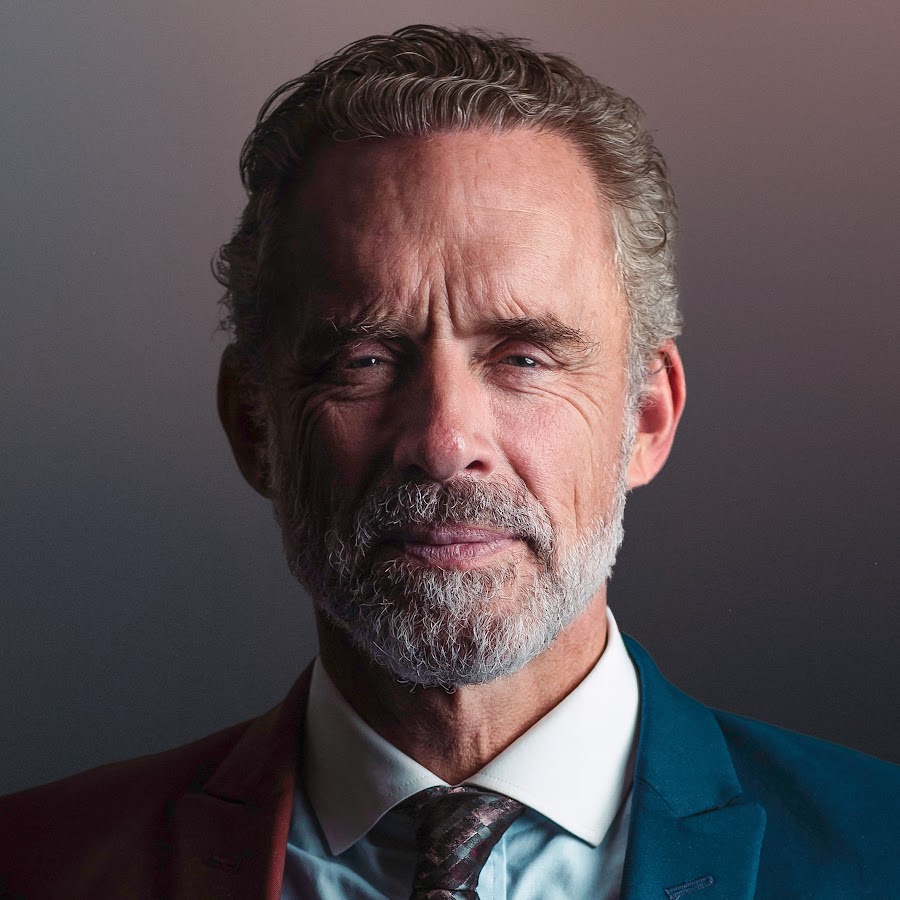
• 12 Rules for Life, Maps of Meaning
• Why follow: Whether you agree or not, he brings Jung, Nietzsche, and behavior science into cultural conversation.
• twitter- @jordanbpeterson
5. Steven Pinker – Language, Evolution, Rationality
• The Blank Slate, Enlightenment Now
• Why follow: Combines neuroscience, cognitive science, and optimism about human progress.
• twitter- @sapinker
6. Esther Perel – Love, Sex, and Modern Relationships

• Mating in Captivity, The State of Affairs
• Why follow: Relationship dynamics, eroticism, and infidelity psychology.
• twitter- @EstherPerel
7. Brene Brown – Shame, Vulnerability, Belonging
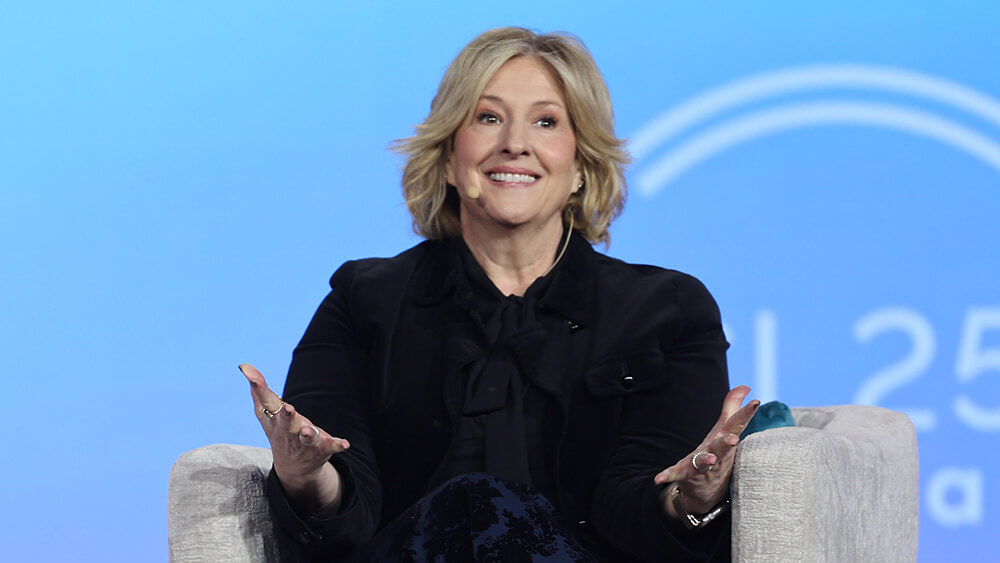
• Daring Greatly, Atlas of the Heart
• Why follow: Why vulnerability is strength. Understanding emotional intelligence in action.
• twitter- @BreneBrown
8. Maria Popova – Meaning, Memory, Mortality, Beauty

• Writes The Marginalian (formerly Brain Pickings)
• Why follow: Blends science, art, philosophy, poetry — perfect for human behavior seen through emotion and depth.
• twitter- @brainpicker
9. Scott Alexander – Psychiatry, Rationality, Philosophy

• Astral Codex Ten (blog)
• Why follow: Long, nerdy, deep dives into mental health, politics, AI, society.
• blog- https://astralcodexten.substack.com
10. Anne-Laure Le Cunff – Learning, Productivity, Neuroscience
• Ness Labs
• Why follow: Creative thinking + neuroscience + emotional health for creators.
• twitter- @ness_labs
11. Tristan Harris – Tech + Behavior Manipulation (Ethics)
• Why follow: Ex-Google design ethicist. Now fighting for tech that respects human nature.
• The Social Dilemma
• twitter- @tristanharris
12. Naval Ravikant – Wisdom, Psychology, Leverage

• Why follow: Mental models + happiness + self-regulation from a philosopher-entrepreneur.
• Twitter- @naval (MUST) listen to all of his podcast. & thank me later.
🇮🇳 Indian Minds to Follow for Understanding Human Behavior
1. Kunal Shah

Founder of CRED | Behavioral Economics + Incentives + Status
• Key Idea: India is a trust-deficient society, and behavior is driven by invisible status games.
• Talks a lot about time arbitrage, mimic behavior, wealth vs prestige signaling.
• “People don’t want rewards. They want to be seen getting rewards.”
• Follow: @kunalb11 on Twitter
• YouTube: podcast (search Kunal shah ) one another Kunal come commodity trader 😂
2. Paras Chopra

Founder of Wingify | Polymath on Psychology, Evolution, AI, and Learning
• Writes the “Inverted Passion” blog & podcast.
• Covers: Evolutionary cognition, decision science, agency, culture as strategy.
• “Evolution doesn’t care about truth. It cares about survival.”
• Follow:
3. Devdutt Pattanaik ( he will teach you intersubjective reality ) (MUST)

Mythologist | Decoding Indian Behavior via Epics & Rituals
• Explains how myth (not religion) shapes identity, behavior, ethics, social roles.
• “Myth is a subjective truth. What is true for one may not be true for another.”
• Writes on power, dharma, gender, hunger, fear — all as behavioral drivers.
• Follow:
• Books: My Gita, Business Sutra, Jaya, 7 Secrets series, etc.
I have a YouTube series of his interviews. Check this out here.
4. Anand Gandhi

Filmmaker | Philosophy, Psychology, and Storytelling
• Ship of Theseus (YouTube), Tumbbad (must-watch indian film)
• Explores emergent behavior, morality, identity, and evolutionary narrative.
• Often speaks on “cognitive dissonance in culture”, speculative realism, and socio-political psychology.
• Follow:
• Philosophy of Tumbbad – YouTube talks
• Producer of OK Computer – tech + behavior + absurdism.
5. Parkhar ke pravachan (Prakhar Gupta ) on YouTube.

Known for making the podcast PG Radio. talks about Philosophy, psychology, behaviour, politics, etc.
Worth checking out, I have talked about him earlier.
Now I have told you earlier & also telling you now, all the resources that I am providing, your job is to UNDERSTAND, NOT REMBERBER OR MUGGUP. & don’t treat it as the prescription. I am just showing you a way. Discover new things following this path or any path.
This is the end of the article. If any part you have confusion about, just let me know, and I will be more than happy to assist you further. Clarity is important, and I want to ensure that you have a complete understanding of the content discussed. Don’t hesitate to reach out with your questions or seek further elaboration on any specific sections or concepts, as I’m here to help you navigate through any uncertainties you may have.

