

Human Behaviour Lesson from reading Dostoevsky (Part 8)
This is part 8, guys. Today I wanna share Dostoevsky’s secret love story-
In Dostoevsky’s biography: A Writer in His Time by Joseph Frank, we learn that Dostoevsky was married twice—first to Maria and then to Anna. Maria was chronically ill and eventually passed away. Later, when Dostoevsky was in his 40s, a 21-year-old woman named Polina entered his life. She was a short story writer and a women’s rights activist.
Polina expected attention and affection from Dostoevsky, but according to her, he didn’t reciprocate as she hoped. At the time, Dostoevsky was already married and burdened with responsibilities. Moreover, he suffered from epilepsy, which affected both his physical and emotional well-being.
Disillusioned, Polina proposed they travel to Europe, thinking nature’s beauty might heal Dostoevsky and strengthen their bond. They planned the trip together, but Polina departed first. Dostoevsky failed to catch up with her—his gambling addiction derailed the journey. He stopped at various casinos on the way, losing all his money (if you’ve played Red Dead Redemption, you can probably imagine the vibe).
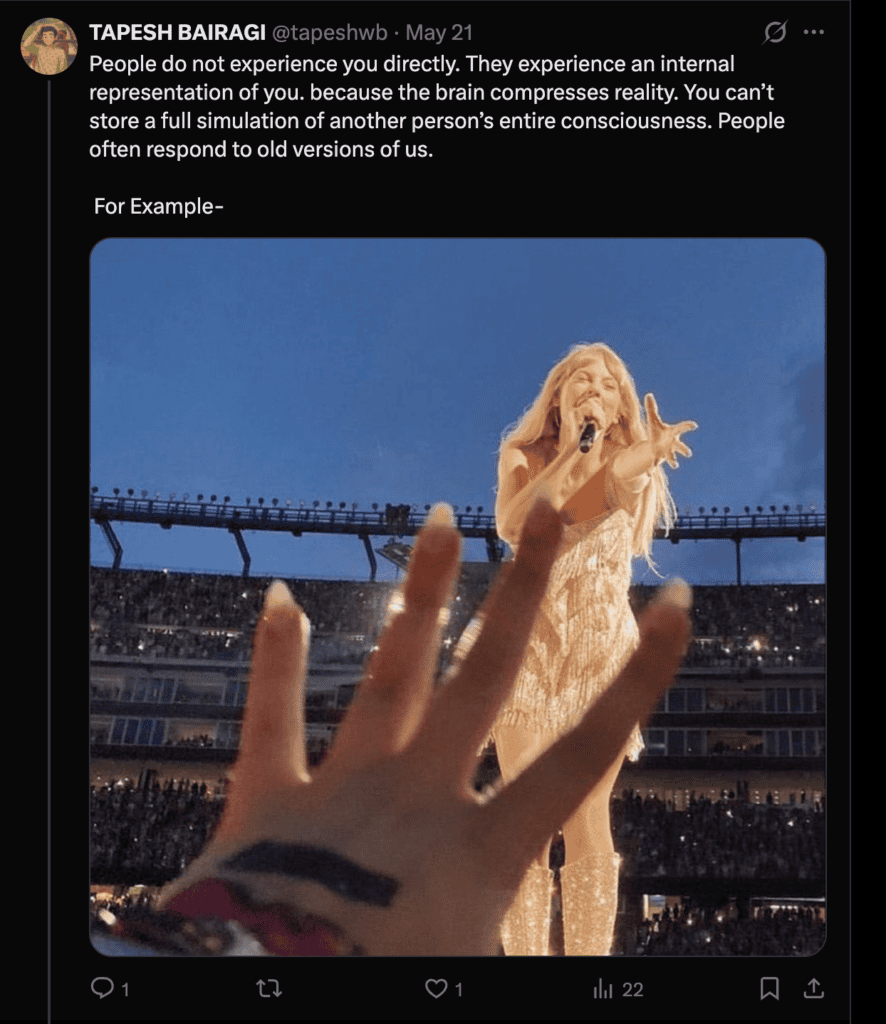
Dostoevsky tried to use logic to resist his emotional impulses but failed &This experience gave him a powerful insight: humans are not rational creatures. They feel first and then use logic to justify those feelings. (Nobel Prize winner Daniel Kahneman echoes this in his book Thinking, Fast and Slow.)
Eventually, as Dostoevsky lost everything, he couldn’t reach Polina, and she ended the relationship through a letter. Meanwhile, Polina met a Spanish man named Salvador, also 21. Disillusioned with Dostoevsky and seeing no future with him, she got involved with Salvador. But the letter she sent never reached Dostoevsky.
When Dostoevsky finally met Polina again, he immediately sensed something was wrong—after all, he was a writer with sharp observational skills. Polina revealed that it was over, and he broke down. However, they stayed in touch as friends, with Dostoevsky trying to be the “nice guy.”
Polina soon realized she had made a mistake. Salvador turned out to be toxic and exploitative, so she ended that relationship, too. She returned to Dostoevsky. Even though things seemed to be mending, she held a deep grudge against Salvador and wanted revenge.
She wrote him a letter and sent him money—intended as an insult (“take this for your services”). But her anger didn’t go away, and she began lashing out at Dostoevsky instead. He became her emotional scapegoat. (This emotional displacement is common in modern relationships, too—teenagers and adults alike. You’re not witnessing anything new here, my friend. Human emotions evolve very slowly.)
One day, while they were in the same room, she grabbed his hand and said, “I like spending time with you.” Dostoevsky was overjoyed—he thought his old love had returned.
But in this relationship, Polina was dominant, and Dostoevsky was submissive. She suffered from mood swings, and eventually, Dostoevsky couldn’t take it anymore and retaliated against Polina. It turns out, she was only with him because she had no better option (again, sadly common in real-world relationships).
Their relationship soured. Dostoevsky returned to St. Petersburg and immersed himself in work, hoping to forget her. But he never truly did. Polina haunted him for the rest of his life. You can feel her presence in many of his works—especially The Idiot, in the character of Prince Myshkin.
Years later, after Maria (Dostoevsky’s wife) died, he went back to Polina and proposed. She refused. Polina herself married once, but that marriage ended in divorce. Eventually, she lived alone.
(If Dostoevsky had lived in the 21st century, this story might’ve ended differently. With modern science, technology, and global connectivity, who knows?)
Now coming back to the main series-
1. Humans act against self-interest to assert will.
Story: The Underground Man admits that people deliberately act irrationally just to prove they are not predictable machines.
Memory Hook: A man refusing a warm coat in winter to shout, “I choose!”
Example: Smokers who continue despite knowing it harms them — “It’s my choice, not yours.”
Teens often make destructive choices, not because they’re unaware of consequences — but to assert identity and agency.
In Hamlet – Shakespeare, Overthinks, delays, sabotages himself — yet insists on choosing his own tragic path, not what is “rational”.
In Fight Club, Men trapped in modern consumer logic create chaos just to feel alive and autonomous. They destroy themselves as a form of protest against being predictable, domesticated “products.”
2. Rational utopias ignore irrational drives.
Story: The Underground Man ridicules the “Crystal Palace” utopia where all would live rationally — he insists people would destroy it out of spite.
Memory Hook: A glass palace shattered by a single stone.
Example: Perfectly planned communities or companies that fail because people gossip, fight, or rebel against order. Algorithms today try to predict behavior, recommend choices, optimize experience, yet people still rebel, go off-grid, reject automation — not because it’s broken, but because they don’t want to be predicted.
In the book, Brave New World – Aldous Huxley (also Netflix series), A society where everyone is happy, efficient, and emotionally flat. Real humanity — pain, love, choice — has been erased. “I don’t want comfort. I want God, poetry, real danger…”
3. People destroy order to prove they are not machines.
Story: Dostoevsky’s characters rebel against systems — even beneficial ones — to show they are free.
Memory Hook: A child scribbling over a perfect drawing just to prove it’s theirs.
Real Life: Employees sabotaging workplace systems (ignoring protocols, skipping steps) simply to resist being “cogs.”
Digital rebels in a world of algorithms “I don’t want to be predictable — I want to be free.” Users rejecting algorithmic recommendations, breaking automation flows, avoiding convenience tools — not because they don’t work, but to feel in control.
In the movie The Truman Show, Truman’s world is perfect — safe, beautiful, orchestrated
But he destroys it and walks out, because it wasn’t real, or his.
4. Spite is a stronger motivator than reason.
Story: The Underground Man takes actions that harm himself, simply because it will also spite others.
Memory Hook: Drinking poison just to leave someone else thirsty.
Example: People staying in lawsuits that drain them financially, just to “make the other side pay.”Voters are acting against their own economic interest. Sometimes people vote or act in ways that harm them financially — simply to “punish the elites” or spite the system. It’s not about what they gain — it’s about who they deny victory to.
Iago in Othello, His motivations are murky — but one thing is clear: He would rather see the world burn than feel wronged without striking back.
In the movie There Will Be Blood, Daniel Plainview destroys a preacher — not for money, but for pride and spite. “I don’t want anyone else to succeed.”
5. Rebellion against determinism drives people to irrational acts.
Story: Dostoevsky rejects the idea that humans are only rational calculators — he shows they’ll rebel against determinism even if it hurts them.
Memory Hook: A puppet cutting its strings and falling flat, just to prove it’s not controlled.
Real Life: Teens making reckless choices (“You can’t control me!”) even when it risks their future. People knowingly ruin relationships, careers, or health — not out of ignorance, but out of desire to “break the system” they feel trapped in. Examples include refusing therapy, quitting good jobs impulsively, or embracing chaos as an identity.
In The Matrix, Neo chooses the unknown over a deterministic machine reality. The human choice to rebel against a perfectly ordered system. In The Dark Knight, The Joker embodies rebellion against structure, meaning, and causality. He burns money not out of greed, but to prove he’s not a slave to systems.
6. Freedom feels heavier than chains.
Story: In the Grand Inquisitor parable, freedom is portrayed as unbearable; people want security instead.
Memory Hook: A prisoner refusing to leave the cell because the world outside is too vast.
Real Life: College graduates overwhelmed by choices — missing the structure of school, some even returning home to regain limits. This is common & personally, I feel this, as after high school I chose my path, I know it was way harder than if i would’ve listened to some authority figure like parents or a teacher. Ask anybody who followed their passion. Same with totalitarianism and cult.
In Huxley’s Brave New World, People are happy, safe, and utterly unfree — but they prefer their chains because they are painless. In the movie The Matrix, Cypher chooses to re-enter the simulation — rejecting truth and freedom — saying: “Ignorance is bliss.”
7. Chaos can feel more authentic than imposed order.
Story: In Demons, radicals believe destruction is truer to the human spirit than artificial harmony.
Memory Hook: A bonfire burning bright, while a stone palace feels cold.
example: Artists or rebels who thrive in disorder, insisting that mess and risk are more “real” than routine stability. same with Revolutionary groups across history. Think of Mao’s Cultural Revolution, where the chaos was considered a purifying fire, but resulted in enormous human loss. Some have sought not reform, but obliteration of existing systems.
Tyler Durden – Fight Club (novel) His claim: “Only after disaster can we be resurrected.” Embraces chaos, violence, and destruction
8. People prefer suffering freely to being enslaved.
Story: The Underground Man insists humans would rather suffer if it proves they have freedom than live in blissful slavery.
Memory Hook: A man choosing thorns over silk cushions.
Example: Someone refusing welfare aid, even while poor, to avoid dependence on “the system.”Many choose prison, exile, or public scorn rather than live comfortably in moral silence. Examples include: Edward Snowden, Andrei Sakharov. Nelson Mandela, who said, “I was not born to be ruled.”
Prometheus in Greek Mythology defies the gods to bring fire (knowledge) to humans. Is tortured for eternity, but does not submit — because he chose the punishment freely.
In Dead Poets Society, His tragic choice asserts: “Better to suffer by my truth than succeed by yours.” Neil chooses death over a life lived according to others’ scripts.
9. Self-will often masquerades as principle.
Story: Ivan Karamazov claims lofty moral arguments, but much of it is really wounded pride and self-will.
Memory Hook: A banner reading “Justice” hides the word “Ego.”
Example: People say “It’s the principle!” in fights — but really it’s about pride, not principle.
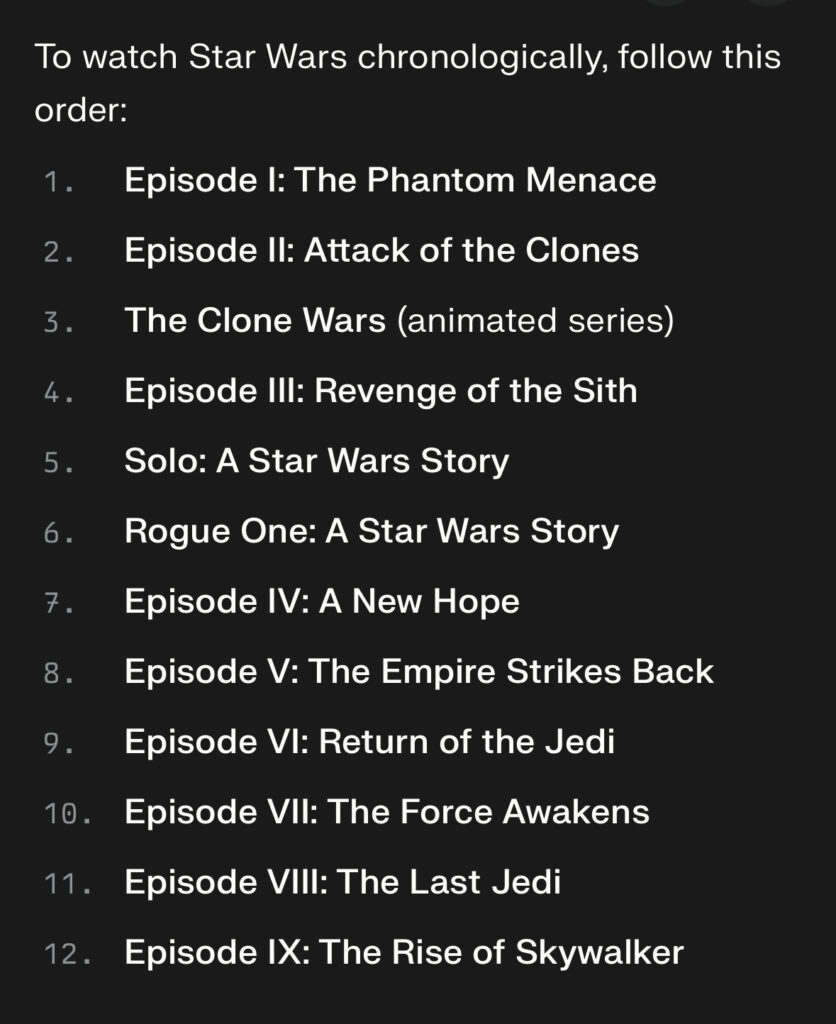
Anakin Skywalker in Star Wars Claims to fight “for peace,” but his transformation into Darth Vader is driven by fear of loss and desire for control. (BTW, I believe everybody should watch the Star Wars series). In the film The Social Network, Mark Zuckerberg’s legal defenses are framed as principles of innovation, but often stem from personal grudges and ego.
10. Human beings need mystery as much as truth.
Story: Dostoevsky’s characters cling to mystery (faith, doubt, symbols) rather than settle for dry rational certainty.
Memory Hook: A candle flickering in fog, more comforting than harsh neon lights.
Example: Even in a scientific age, people are drawn to horoscopes, myths, and spiritual rituals — needing wonder, not just facts.

In the series – Lord of the Rings – Tolkien Mystery and myth pervade the story — the unknown, the sacred, the hidden — and they give the world depth that mere facts never could. In Interstellar Science and data drives the mission, but love, faith, and mystery guide the heart of the story.
We’re so glad you’ve walked this path with us through Part 8. The insights here are not abstract — they live in us, in you. Now we have a question- Have you ever found strength in places you thought would break you? Has someone else’s quiet endurance ever inspired you?
If so, we’d love to hear your story. Drop a comment, start a conversation, or simply reflect out loud. This is a shared space — and your experience adds depth to the discussion.

