

Parenting Wisdom Across Time: Chanakya, Piaget, and Freud.
India’s history is filled with deep insights into life and parenting. One of the greatest voices is Chanakya (Kautilya), advisor to Chandragupta Maurya. Centuries later, Western psychology produced thinkers like Jean Piaget and Sigmund Freud, who also offered frameworks for understanding childhood.
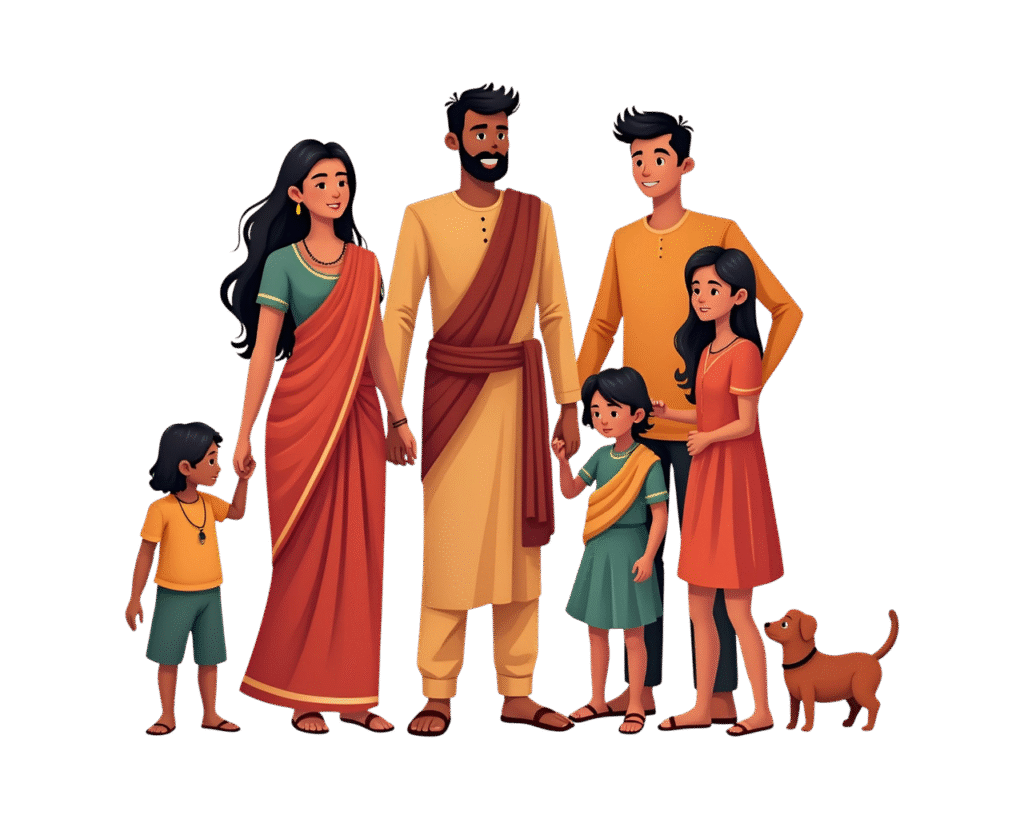
Though they lived in different eras and cultures, their ideas surprisingly connect.
Chanakya’s Parenting Wisdom
Chanakya advised:
- Love your child until age 5.
- Discipline from 6 to 15.
- From 16 onward, treat them as friends.
He also described Saam (dialogue), Daam (incentive), Dand (discipline), and Bhed (strategy) as methods of influence, which can be reinterpreted metaphorically for parenting.
Jean Piaget’s Stages of Development
Piaget showed that children think differently at each stage:
- 0–2 years (Sensorimotor): learn through senses; need love and security.
- 2–7 years (Preoperational): imaginative; need gentle guidance.
- 7–11 years (Concrete Operational): logical with real things; need rules and structure.
- 12+ years (Formal Operational): abstract thinkers; need friendship and respect.
Freud’s Psychoanalytic Lens
Freud emphasized that early childhood experiences shape personality. His stages (oral, anal, phallic, latency, genital) were controversial, but the core insight is lasting:
- Children’s needs change at different ages.
- If needs are neglected or harshly controlled, it leaves long-term psychological effects.
- Parenting must balance love, limits, and healthy independence.
East Meets West: A Unified View
- Early Childhood (0–5 years)
- Chanakya: love and affection.
- Piaget: sensorimotor learning.
- Freud: oral stage—security and bonding matter most.
- Middle Childhood (6–15 years)
- Chanakya: discipline and teaching.
- Piaget: preoperational → concrete operational; children learn rules and logic.
- Freud: anal & latency stages—boundaries, self-control, socialization.
- Adolescence (16+ years)
- Chanakya: Treat as a friend.Piaget: formal operational stage—abstract thinking, questioning authority.Freud: genital stage—identity, relationships, maturity.
Why This Matters Today
By combining Chanakya’s ancient Neeti, Piaget’s developmental science, and Freud’s psychological insights, we see a consistent truth:
- Children require different approaches at different stages.
- Love, discipline, and respect are not opposites but phases of the same journey.
- Parenting is not rigid—it’s adaptive, evolving as the child grows.
✨ This fusion gives your article both authentic cultural depth (Chanakya) and scientific credibility (Piaget & Freud).
👉 Do you want me to rebuild your full article with this integrated framework (so it reads like one seamless essay), or should I give you a section you can insert into your existing blog post as a “Modern Comparison”?
Here are some FAQs.
Chanakya’s ambitions took flight when he was insulted by the emperor of the king Dhananad. here is the story…
One day, The emperor of Magadha went to Dhana Nanda to ask for help to stop Sikandar’s influence. But in the pride of power, Chaur Dhana Nanda rejected his proposal, & he shoves him. when he fell, his peak got opened. chancy He said that “Be a priest and take care of your peak”; It is the job of the King to make war. You are a pundit, just do the panditai , otherwise, I will cut this peak of yours”
At that stage, Chankya felt so insulted.
that day he promised to Dhananda,
” I will not tie this peak until I destroy your kingdom & make a Unified India & its king”.
Alexander and his army were defeated by King Porus.
The reasons that the army mutinied were..
1.Soldiers missed their families, and became tired of endless battles.
2.Greek soldiers feared the might of Nanda army, which had 6,000 war elephants.
3.Alexander himself was probably wounded.
in our opinion, probably the might and fighting spirit of the Indian army defeated Alexander, and hindered his ambitions to be the Emperor of the World.
Yes, Alexander defeated Porus in the Battle of Hydaspes in 326BC.
however, he was impressed by the courage and valor shown by Porus in the battle and so he asked Porus how he would like to be treated after the defeat. Porus replied that Alexandershould treat him in the same way a king treats another king. then he gave back his kingdom to him again but some rules were there.
They are the same person. Born as Vishnu Gupta, he adopted the name “Chanakya” to show this father’s name Chanak. who was brutally killed on the orders of King Nanda and was not even given a proper funeral?
Chanakya wrote his treatise on economics, known as Arthashastra, with the pen name of Kautilya.
There is a huge controversy among people about Chanakya’s death. but the truth is, Chanakya got something called “icca maran”(Hindi) means he can choose when he wants to die. he died in 283 BC according to various studies.

