
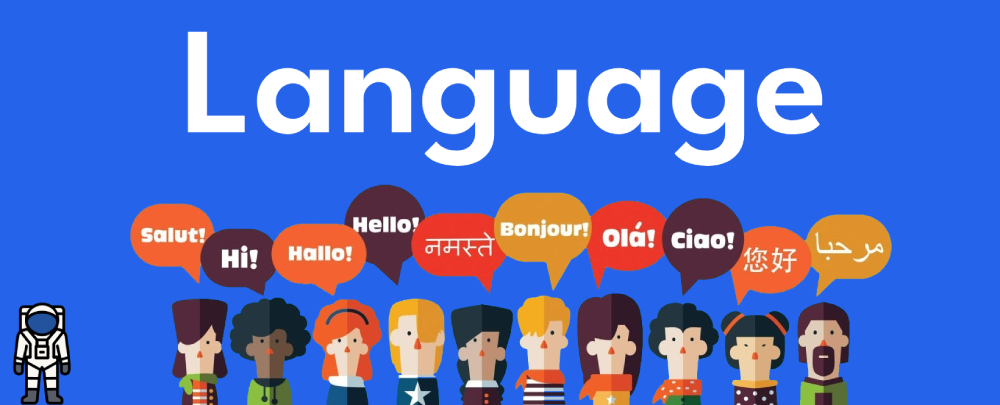
10 ways to help in your child’s language development
Introduction
The capacity to acquire and use language is a key aspect that distinguishes humans from other species on earth. Although it is difficult to pin down what aspects of language are uniquely human, there are a few design features that can be found in all known forms of human language, but that are missing from forms of animal communication.
For example, many animals are able to communicate with each other by signalling to the things around them, but this kind of communication lacks the arbitrariness of human vernaculars (in that there is nothing about the sound of the word “dog” that would hint at its meaning).
The scientific research
Scientific study has shown us that parents play a critical role in a child’s language development. Even though at an early age it is an inherent process in which children accrue languages automatically. In a child’s brain, there are 2 devices called LAD & Parol, with the help of that device they learn a language. But in order to train that device, you need to provide some information from the outside world.
There are two main guiding principles in first-language acquisition:
- Speech perception always precedes speech production. and the gradually evolving system by which a child learns a language is built up one step at a time, beginning with the distinction between individual phonemes.
- Speech production is the process by which thoughts are translated into speech. This includes the selection of words, the organisation of relevant grammatical forms, and then the articulation of the resulting sounds by the motor system using the vocal apparatus. This can be spontaneous such as when a person creates the words of a conversation, reactive such as when they name a picture or read aloud a written word, or imitative, such as in speech repetition. source: Wikipedia
How to help them learn languages
There are multiple ways you can do this, first understand every student is not the same. So the process should also be different for individuals. Hence we are sharing with you some common tactics that, will benefit you, especially when your native languages is different & you want your child to learn different languages.
In India, mostly city people face this kind of problem. If you are one of those parents share your story with us in the comment section. We will jump in the most interesting story. Moving further here are some ways you can help your child to learn new languages.
1. Talk with them, on any topic you possibly can
Narrate the day as it evolves. Tell your child,
For instance, “Now we’re going to school”. Tell them the importance of going to school, tell them interesting stories, advice him with anecdotes. You don’t know how much your kid love story. As you go further gradually your child will acquire the style your thought process. This is how you build their foundation of life . & if this foundation is strong, then it’s a no brainer that he /she will do something great in life. Here is a detail video on this topic check this out.
Once a wise man said – “Rather than catch them a fish, teach them how to catch a fish”
2. Read with your kid or tell them to read for you
“Child doesn’t do what you tell them to do. They do what they see you do”.
It’s never too early to read to your baby. One good predictor of future reading success is the amount of time parents spend reading with their child. Parents can start with simple board books and graduate to picture books and longer stories as their child gets older. Story times at the local library or bookstore in your home can also help a toddler develop a love of books.
But maagmell I’m so busy that I don’t have time for reading to my kids. We are not saying you should read every day. We are saying whenever you get time on weekends or on holidays instead of watching Netflix or playing games, spend time with your kids.
Remember” your child needs you the most than they need you anything in the world.”
3. Enjoy music together.
Who doesn’t like music? We know everybody does!
Music has its own power to puts feelings into words. For instance, explain me sugar is sweet in words. You can’t right? It’s impossible. Same goes for a child.
Young children love music and movement. So when they listen to lively songs, like “Old McDonald Had a Farm,” they learn about the world around them and the rhythm of language. Having said that here is a disclaimer, never listen to frustrated, negative, unnecessary, abusive music in front of your child. Later on, this can have a huge impact on your child behaviour as well as character.
4. Tell stories.
Make up elaborate stories with characters, conflict, adventure, and a happy ending. Be sure that the stories fit your child’s interests and aren’t too scary for her liking. But our suggestion would be to avoid horror story, or any explicit story, instead tell them motivated, comedy, inspiring story. Which has some moral values? This will not only make your child feel happy & connected but also will make you happy to connect with them.
5. Follow your child’s lead.
If your little one seems interested in a particular picture in a book, keep talking about it. For instance, if hs/she seems intrigued by a cartoon, talk about that, ask them about their school friends, teachers. Repeat her babbles back to her, ask questions, and interact with her. the more you will interact the more they will get better at it.
6. Allow him to play with other kids to talk with them, to interact with them.
Human is a social animal. We can’t live alone & you must have already realised & experienced this in COVID-19 lockdown. Communication skill is one of the most important skills that your child needs in their life. Where ever you go if you have this skill this world would be your oyster. Since childhood, you should force on your child to build this skill along with other social manners. How to do this? Add them on drawing classes, in singing classes or any other extra curriculum activity. there they will not only learn that but also will learn how to connects with other children who are not their classmates.
7. Never criticise your child’s articulation or speech patterns.
Learners make mistakes, whether if he/she child or adult. By making mistake they will learn quickly rather than making a correct assumption. If you always criticise your child’s mistake,
after some time he/she will feel a sense of failure within themselves. This can be a cause of a victim or failure mentality later on, or I’m good for nothing kind of personality in future.
8. Use television, mobiles & computers sparingly.
The American Academy of Pediatrics recommends that children younger than 2 should not watch television at all and that children 2 and older view no more than two hours of quality programming a day. While some educational programs can be beneficial to kids, TV shows don’t interact with or respond to children, which are the two catalysts kids need to learn a language.
Computer games are interactive, but they aren’t responsive to a child’s ideas. Keep a balance in between everything, allow them to access the internet once in a while, play games watching, educational fun videos. Allow them to take advantage of new technology (internet) that this human history has ever created. Use it for your own advantage.
9. Go on trips.
Travelling can teach you a whole lot of things that no school can ever teach. That’s why we love travelling so much. Travelling gives your child a practical knowledge of the world. A trip to the zoo, the aquarium, or a children’s museum will open up a whole new world for your child. As an added bonus, they’ll want to learn the names of all those fascinating creatures and fun activities they experienced. Allow them to go on a school trip. Minimum once or twice in a year you should take your child on a trip. If you can afford more, go ahead.
10. let them ask question as much as they want, let their curiosity to flow away.
The more they will ask question the more they will learn. Our current education system doesn’t allow kids to discover, mostly in a country like India. Consequently, you need to build this in this in your home environment. Make a calculate of asking goof question, make it rewarding. If you can plant this seed at an early age, your child will bound to be a good student in life.
Here are some FAQs.
The Einstein Syndrome (coined by Sowell and Camarata) helps explain a certain group of late-talking children. Einstein Syndrome was named for scientist Albert Einstein who was a very late talker and displayed all of the characteristics that these very children display.
Generally, children begin to babble from around the age of six months and say their first words between 10-15 months (most start speaking at about 12 months). They then begin to pick up increasing numbers of words and start to combine them into simple sentences after around 18 months. but some times it can take 2 year half for some child, however, but beyond that is called Einstein Syndrome.
vocabulary.
if he/she knows how to express their feeling incorrect words then the job is done.
there are 3 types of language skill that parents & teachers need to know.
1.Expressive Language: The words children use when they talk.
2.Receptive language: The words that children can understand, although they may or may not use them when they speak. Typically much more expansive than expressive language, especially for those who speak or are regularly exposed to a second language.
3.Pragmatic language: The way language is used in social settings like, knowing what to say and how to say it to achieve the desired outcome.
& this is where my friend you need vocabulary as well as a nuanced understanding of the social world.
Oral language, aka the foundations of which are developed by age four, has a profound impact on children’s preparedness for kindergarten and on their success throughout their academic career.
it has 6 components –
1. Phonology (sounds within a language)
2.Vocabulary (Semantics), a particular sound which represents particular feelings.
3.Morphology (a subset of syntax and sometimes considered as part of the vocabulary)
4.Grammar (Syntax) (a combination of words in a sentence)
5.Pragmatics ( social use of language)
6.Discourse (written form)
1. English– cause it is international. this needs no explanation. you know how important it is
2.Chinese/Mandarin – we all know about china. world’s most populated country as well as a manufacturing hub in the world with multiple investments in the sunrise industries(tech, oil, solar, electric).
Approximate 982 million persons are native speakers, while altogether 1.1 billion people know the Chinese Mandarin dialect. It seems like China will become the world’s leading economy by 2050, which also means that it will become even more influential worldwide.
3.Spanish -There are around 330 million native speakers, while more than 420 million use it at least as their second language.
Spanish is the primary language in more than 20 countries, the majority of which are situated in Latin America.
However, it is very important in the U.S. as well, since around 35 million people in this country use Spanish at home.
go to youtube search for any Spanish song & see their views.
4. Japanese – Another Asian language is on the list of most important languages due to this country’s economic strength and influence. Japan is mot like other countries. it’s completely different from the rest of the world. Around 127 million speak Japanese natively and one more million use it to some extent.
5. Hindi – words 2nd most populated diversify country India. Hindi is the official language there, besides other 29 regional languages.
with its larget youth population, it can be a good choice for any foreigner to learn.
along with these, German, French, Italian, Arabic, Russian Portugués can be good options as well.
Now we have completed this article, we want to hear from you guys, If you have some other points to add in this list, let us know in the comments. We will love to hear from you guys & if you like this article, share this with your friends & family, with that said until next time bye & take care!

