How to Study Psychology on Your Own — From Zero (With No Background) (Part 2)
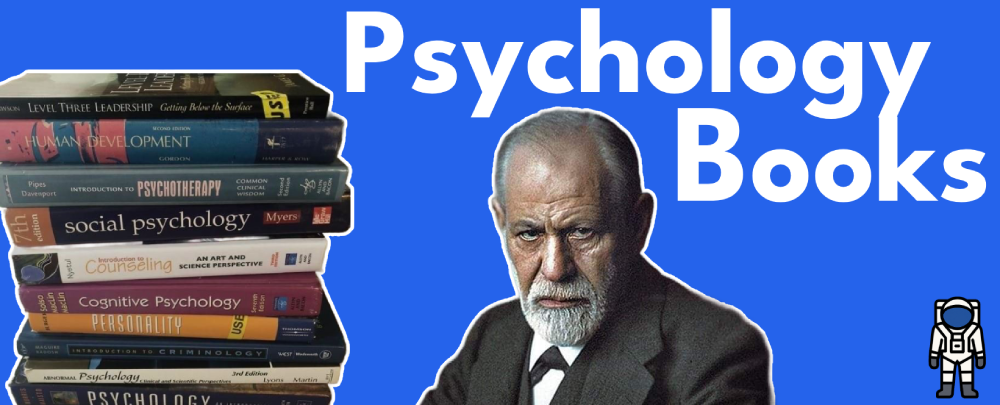
This is part 2 of the series. First part was about online classes, which you can check here. This post is about Books for Learning Human Behaviour — Beginner to Pro
Why should you read books, cause somebody has gained some experience by working for 20 years & you can download the whole knowledge in just a couple of days & with a couple of bucks. How cool is that?
This is the 2nd article of the series on learning psychology for beginners. In this article, I will talk about every book I read in order to understand human behaviour.
I will start this book list from the beginning to the end ( FYI, there is no end) for each level. I encourage you to read the books as you take the classes I recommended in the earlier post.
Disclaimer: You can read the books in any way you want, and the books I recommend are the ones I have read and that resonated with me. I have read a lot of books that didn’t connect with me. I want you to take this post as a recommendation — like a direction, not a prescription or the ultimate list. I have divided it into 3 parts, but you can read it in any order. it doesn’t matter most of the time unless it’s a sequel.
Learning and understanding human behaviour is something that can’t be taught but must be learned.

This is one of the quotes from one of my mentors and inspirations.
BEGINNER LEVEL
- Why Men Don’t Listen & Women Can’t Read Maps – by Barbara and Allan Pease
This is a very light read, which you can read on a bus or train, or skim. I recommend this book because you must read something that inspires you to study further and raises more questions. - The Psychology Book – by DK Publication
This book is very beautiful, filled with pictures, starts with history, and explains things in a simple, structured way. (BTW, if you want to start anything new, you can start with DK books. They have books in many foreign languages.)
Alternative: A Degree in a Book: Psychology by Alan Porter
This book too is very beautiful and easy to understand. It will give you an intro to this subject. - Sapiens – by Yuval Noah Harari
This book is a must-read for an introduction to human civilisation. I’m 90% sure you’ve heard about this book multiple times if you’re on social media or into podcast culture. It also has a 2-volume graphic novel version, but I recommend the original work, or read it in your own comfortable language. - Freakonomics: A Rogue Economist Explores the Hidden Side of Everything – by Steven Levitt & Stephen J. Dubner
This book is an interesting read for the curious mind. It’s a good intro to behavioural economics and explores how incentives and human behaviour drive everyday life.
INTERMEDIATE LEVEL


- Thinking, Fast and Slow – by Daniel Kahneman
This book is dense and filled with information. It needs to be read cover to cover while taking notes. It took me three readings over one year to understand it. Daniel Kahneman (1934–2024) was a Nobel laureate and one of the founding fathers of behavioural economics. - Predictably Irrational – by Dan Ariely
Similar in content to Thinking, Fast and Slow, Ariely shows how people consistently make irrational decisions — but in predictable ways. - Influence – by Robert Cialdini
Though recognised as a book on sales, it’s basically a psychology book on influence. He gives us six or seven ways to influence someone’s decision — really nice read. - Emotional Intelligence – by Daniel Goleman
Goleman argues that emotional intelligence (EQ) may be more important than IQ. He breaks it into five key areas: self-awareness, self-regulation, motivation, empathy, and social skills. - The Elephant in the Brain – by Kevin Simler and Robin Hanson
This book is a beast. Very good content. One of the best books on the topic.
The author also has a blog: https://meltingasphalt.com/archive/ — Highly recommended. - The Selfish Gene – by Richard Dawkins
Must-read for understanding both human and animal behaviour. One of the classics. You should read this at least twice, slowly. I’ll share my notes with you guys. - The Red Queen: Sex and the Evolution of Human Nature – by Matt Ridley
This book is about how human nature evolved as a result of sex. Very interesting. The title comes from Lewis Carroll’s “Through the Looking-Glass”. - The Origins of Virtue – by Matt Ridley
Discusses cooperation, reputation, and decision-making in human societies. Makes you think about the evolutionary origin of morality. - Genome: The Autobiography of a Species in 23 Chapters – by Matt Ridley
Each chapter focuses on a different human chromosome and explores how genetics influences human nature. Some of the science may be a bit outdated (published in 1999), but still a solid read. - Homo Deus – by Yuval Noah Harari
A sequel to Sapiens, this book talks about the future of human evolution and prediction. I don’t agree with all of it, but it’s a thought-provoking read. - 21 Lessons for the 21st Century – by Yuval Noah Harari
A mix of Sapiens and Homo Deus, but with new content too. Very useful in understanding where we are now as a civilisation.


PRO LEVEL
- Behave – by Robert Sapolsky
Sapolsky spent over 20 years researching behaviour, including years spent observing primates in Africa. This book is dense and mixes biology, psychology, and sociology — all in one. - Maps of Meaning – by Dr. Jordan Peterson
A must-read. Very complex. Might require the help of AI or external summaries to understand. But it’s one of the deepest dives into human meaning and behaviour. Available free online, and the paperback is under $10. - Man and His Symbols – by Carl Jung
This original work discusses the collective unconscious, archetypes, and dream symbols. Even though I still don’t fully understand or agree with all the content, it’s worth reading. - The Interpretation of Dreams – by Sigmund Freud
Another classic. Very old and a bit outdated, but essential to understand the history of how humans have interpreted their inner worlds. Read it, but don’t take it as the absolute truth. - On the Origin of Species – by Charles Darwin
Did you know Darwin was a good writer, too? Apart from being the Einstein of biology, he wrote very engagingly. This book is foundational for evolutionary psychology and is often available for free or for under $5. - Nature Via Nurture – by Matt Ridley: Genes, Experience and What Makes Us Human — Ridley explores how genes and environment interact to shape our behaviour, arguing that the debate isn’t “genes or nurture” but rather a dynamic interplay.
- The Origins of Virtue – by Matt Ridley: Human Instincts and the Evolution of Cooperation — Focuses on how behaviours like altruism, trust, and cooperation might arise through evolution, from a sociobiological vantage.
- The Red Queen – by Matt Ridley: Sex and the Evolution of Human Nature — Investigates human nature through the lens of sexual selection and evolutionary psychology, considering how sexual dynamics shape behaviour.
- Geneome – also by Matt Raidly: Ridley structures the book around the 23 pairs of human chromosomes, dedicating one chapter to each. Each chromosome becomes a metaphorical chapter in the story of us — how genes influence everything from behaviour to disease, from intelligence to free will.
Here is one bonus book, Nexus / The Information Age Trilogy – by Yuval Noah Harari
Talks about the rise of the information age and explores subjective, objective, and intersubjective realities. If you liked Sapiens, you’ll enjoy this too.
Now, guys, these are some books which I have read & benefited from, but as I said earlier, these things can’t be taught. but can be learned. So this is not a gospel; these are some suggestions to get you started. Only……… If you have any books that you think should be in the list or that you enjoyed, share them with us in the comments section. Let’s build a community together.
So until next time, bye & take care.

