

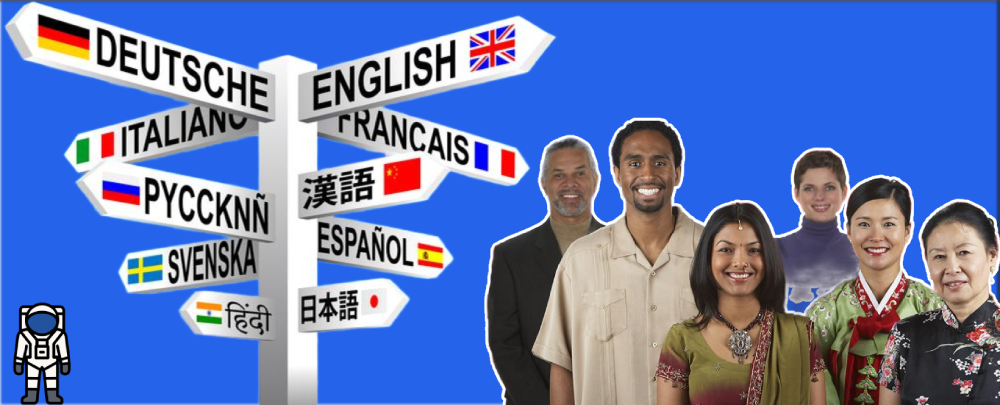
Here is a cheat code for life.
Hey, have you ever watched an English movie in your own language (dubbed)?
I bet you have! And if you’ve then watched the same movie again in English & you know how it feels—it’s like a whole new experience. It’s not just about the words; something deeper changes, like the tone, the rhythm, and even the emotion behind each line. The translation can’t capture the soul of the original.
I guess you have watched lots of videos on YouTube or read articles like this, where people speak multiple languages, & speak about the importance of having it. But it was the people who already have a high IQ(or are lucky). (Richard Feynman, Oppenheimer, Niels Bohr, etc.) But today I am gonna give you my perspective, who believes me wasn’t born smart.
I’ve read Dostoevsky, Tolstoy, and Márquez(Gabriel García Márquez)—all in translation. But I can promise you, something always gets lost. Why? Because language is never just a bunch of words. Language carries culture, history, geography, emotion, and identity.

When a Bengali like me reads Rabindranath Tagore in Bengali, it feels different—almost spiritual. But when a non-Bengali or a foreigner reads him in English, something of that essence fades away. The melody of the words, the subtle humour, the emotional undertones—they don’t survive the translation.
The same happens when you watch a French film in French, or a Spanish one in Spanish—compared to their dubbed versions. Dubbed films often lose the charm, the local colour, and the rhythm of the actor’s original expression. You can translate words, but you can’t always translate life.
I’m from the eastern part of India and now live in Delhi.
When I first moved here, I knew only one language—and half of Hindi (even now, I can’t read or write it well). But today, I can speak four languages.
& here is my other observation, the four-language world is totally different. When you speak a new language, you discover yourself in a new world –
Here’s something I’ve observed through my journey of learning languages —
When you start speaking a new language, you don’t just learn new words; you enter a new world. It’s almost magical — like every language has its own universe, its own rhythm, culture, and psychology. The way people think, what they value, how they express emotions — everything changes with the language.
Let me explain what I mean with four examples — the four worlds I’ve experienced so far, & I am sure that every language has its own world-
The Bengali-Speaking World
This is the world I grew up in. It’s full of nostalgia, emotion, and culture. Every conversation feels like a warm hug from the past — full of poetry, art, literature, and music. When you speak in Bengali, you’re not just communicating — you’re feeling. The topics that come up are often about memories, family, festivals, food, and deep connections. People value traditions, emotions, and relationships. It’s not about competition — it’s about belonging. It’s a world that breathes culture and softness — a reminder of where your roots are.
The Hindi-Speaking World
Then comes the Hindi-speaking world, a space filled with spirituality, identity, and debate. Conversations here often revolve around India’s past, government jobs, present, and future, topics like religion, morality, culture, politics, and philosophy. The Hindi world reflects the Indian mindset, from discussions about vegetarian vs. non-vegetarian, karma, dharma, Hinduism, tradition, national pride, to social values. It’s a world that constantly questions — Who are we? What do we stand for? The Hindi world makes you reflect, debate, and connect to a collective consciousness.
The Bengali world doesn’t care about veg or non-veg or your caste or religion. But the Hindi world does.
The English-Speaking World
Now this one is completely different — it’s the world of growth, efficiency, ambition, and progress. Here, conversations revolve around success, development, ideas, innovation, and excellence. You’ll hear words like start-up, efficiency, mindset, productivity, capitalism, freedom, science, philosophy, and self-improvement. It’s a world driven by the future — by doing, achieving, and becoming the best version of yourself. The English-speaking world celebrates hustle, individuality, and quality. It’s not about where you come from — it’s about what you can create. It’s a space of clarity and ambition, where growth is the ultimate religion.
They don’t care about your ethnicity, religion, food habits, etc. The Gov job concept doesn’t exist.
The Spanish-Speaking World
And then there’s the Spanish-speaking world —a completely different energy. Here, life is not a race — it’s a celebration. People live with passion, warmth, and freedom. The vibe is all about travel, music, friendship, joy, football, and love. You’ll hear words like vida, libertad, placer, viajar, fiesta —because Spanish speakers don’t just exist; they live. It’s not that money or success don’t matter — they just aren’t everything. The Spanish world values presence, emotion, and enjoyment. It’s the “YOLO” culture in its truest sense: You only live once. You can almost feel the sun when you speak Spanish —It’s a language that dances instead of walking.
Unlike the English-speaking world, here, vacation is a big concern. work-life balance, a retirement plan does exist.
Bengali connects me to my roots. Hindi connects me to my nation and its soul. English connects me to ambition and intellect. Spanish connects me to joy and freedom.
And that’s the beauty of languages —
They don’t just change how you speak; they change who you are.
Now, how did that happen?
What Happens to Your Brain When You Learn a Language?
Learning a new language is like giving your brain a fantastic workout! Neuroscience studies reveal that when you pick up a new language, you create new neural connections, which makes your brain super flexible. Bilinguals often have better memory, sharper decision-making skills, and quicker cognitive responses. Plus, learning and switching languages boosts your executive function—the same skill that CEOs use for strategy and planning. It can even delay cognitive decline and Alzheimer’s by up to 4–5 years!
So, in a nutshell: Each language unlocks a stronger version of you!

Psychology Benefits: You Think Better
Every language is more than just words; it’s a whole new way of thinking. You become more empathetic, understanding how others see the world. You gain confidence because you step out of your comfort zone. You communicate with different people → social intelligence increases. You develop identity flexibility — you can be more than one version of you.
Psychologists call this “cognitive perspective shifting.”
It means your brain becomes capable of holding multiple viewpoints at once — a superpower in human relationships.
Street-Smart Advantage: Survival Skills Upgrade
When you move to a big city, like my move from East India to Delhi, language becomes a real survival tool. You negotiate better. You can avoid people trying to fool or manipulate you. You understand jokes, warnings, and subtle expressions — the real language of the streets.
A language is a shield in an unfamiliar environment, and sometimes, it’s your bridge to opportunities.

IQ & Intelligence Growth
Studies show that multilingual speakers score higher in Problem-solving, Critical thinking, Creativity, and Multitasking
Even if your school marks don’t show it immediately, your mind evolves. Your brain becomes more efficient, like upgrading from a 3G to a 5G network.
Career & Global Opportunities
In our world, where global markets and remote work are the norm, multilingual folks have a real edge! They’re better at leading across cultures, opening doors in tech, tourism, diplomacy, marketing, media, research, and so much more.

Language Makes You a Bigger Person
It’s not just about having a big vocabulary—it’s about expanding your identity.
When you speak more languages, you’ll have more friends, feel at home in more places, and live multiple lives within one lifetime.
Status Symbol
In India, English is also a status symbol. I live here, so I can speak for it, but I’m sure in many third-world countries, especially those influenced by British colonisation, it’s still a symbol of status. As Tolstoy famously wrote in “War and Peace,” this was happening in Russia during Napoleon’s invasion. The French language was also a status symbol back then.
Why Learn Languages When AI Is Around?
Because AI can’t replace the human connection we all crave. Technology can give you the words, but only you can infuse them with emotion, timing, and meaning. Language is what makes you truly human, intuitive, and alive. AI might help you speak, but only learning a language helps you feel like you truly belong.
Now, AI can translate words, but it can’t quite capture the magic of trust, bonding, humour, or cultural understanding. And that’s where languages shine!

Now the question is which language you should learn cause it’s a long-term commitment, so take time to decide & it’s gonna be different for individual to individual which parameter they will consider. But one thing that everyone should consider is which language they enjoy & have an interest in. Otherwise, they are not gonna survive this journey. There are gonna be ups & downs & remember no matter how you learn, if you don’t study yourself or put effort into then you won’t be able to do it. Everybody is gonna be different, learning time, style, speaking fluency, everything is gonna be different, so go for interest first.
Here are some choices, but I am gonna talk about my experience, what I know ( will be different for different places, but the core is the same )
My top pick (I am not gonna mention English cause I believe if you are reading this article, you already know English). & if you wanna suggest someone learning any foreign language who doesn’t know english or can’t speak. Suggest English first. Now, in 2025, not knowing English is a form of paralysis.)
Before going into the main article, I wanna talk about a concept called network effect in learning a language. I got this idea from a Paras Chopra blog post, which you can check here.
:max_bytes(150000):strip_icc()/network-effect.asp-Final-fd6bbd83225b463cbffbf32049eb4f1f.jpg)
1.🇨🇳 Mandarin Chinese – The Language of the Future
Why learn it:
With over a billion speakers, Mandarin is the language of global trade, technology, and one of the world’s oldest civilisations. China is the top competitor of the USA, so I guess the opportunities gonna be huge. This is highly recommended for a child. If you are a parent, introduce this to your child as early as possible, coz it takes a lot of time.
Pros:
It gives you a huge career edge in business, diplomacy, and tech. It helps you understand Chinese philosophy, art, and calligraphy. The grammar is surprisingly logical—no tenses, no gendered nouns.
Cons:
Time is the biggest concern. It’s hard too. not gonna lie. It’s tonal: one syllable can have four meanings depending on pitch. You’ve got to memorise thousands of characters.
2. 🇫🇷 French – The Language of Art and Diplomacy
Why learn it:
If you want to be classy & enjoy art & history, this is for you. If I could start again, then I would pick French, not Spanish (I have learnt Spanish BTW). French is poetic, expressive, and super relevant around the world—used in international relations, literature, fashion, and cuisine. BTW, this is also most widely available, in Delhi& other metropolitan cities, most of the private schools teach French as a school curriculum, & online is filled with this. Even the govt schools, I guess.
Pros:
French doesn’t just sound beautiful — it teaches you to think beautifully.
Cons:
Pronunciation can be tricky for beginners. Grammar has many exceptions (the French love elegance, even in complexity).
3.🇩🇪 German – The Language of Logic and Precision
Why learn it:
Germany is Europe’s economic powerhouse, and its language is a gateway to philosophy, science, and engineering. Their history is rich in science. Man, Germans are the real shit if you read history carefully.
Pros:
Excellent for technical fields, research, and study abroad programs. Logical once you understand its structure. Rich intellectual heritage — Nietzsche, Goethe, Einstein.
Cons:
Compound words can get… very long (but also fun to learn!). Grammar cases can be intimidating at first.
4. 🇪🇸 Spanish – The Language of Warmth and Expression
Why learn it:
Spanish is one of the easiest languages for beginners and the second most spoken in the world after Mandarin.
Pros:
Widely used — from Spain to Latin America to the U.S (Why I learned it). Simple pronunciation and grammar compared to many European languages. Full of vibrant culture: salsa, flamenco, Gabriel García Márquez, and Almodóvar films. Makes learning other Romance languages (like Italian or French) easier later.
Cons:
Many regional variations in vocabulary and accent. In some regions, people speak very fast — good luck in Madrid or Mexico City! The content is not as good as compared to French pr German. I learned this lesson the hard way. This language has no quality (in my opinion). Most of the Spanish-speaking countries are now poor & crime rate is high not very safe. Poverty is everywhere. Most of the mainstream movies are sexualized (coz it sells). A big chunk of classy Spanish people have moved to the US & they can now speak English. So not worth it.
BTW, I am gonna share all of my resources here for free if anybody wants to learn them.
P.S.: Please remember all of this is just my opinion.
And hey, remember — there are like, thousands of languages out there. So pick one and start learning before your brain changes its mind again. These were just my suggestions, not commandments from Mount Google. Do your own research. Stalk a few polyglots on Instagram or YouTube — they’re like the fitness influencers of the language world (but with flashcards instead of dumbbells).

And please, don’t learn a language just to get a certificate. I’ve met people who proudly wave their “Level B2” certificate but can’t even order coffee without Google Translate. Learn it to actually use it!
If you ask me, speaking should be your top priority — but hey, if someone wants to start by memorizing 500 grammar rules, that’s their circus. Just set a goal, stay consistent, and remember: learning a language takes time, effort, and a few embarrassing moments. Stay patient, stay curious, and laugh at your mistakes — they’re proof you’re learning!

