

Human Behaviour Lesson after reading Dostoevsky (Part 5)
Hi guys, this is the 5th part in this series. Hope you are enjoying this.
It’s often said that writers are products of their time — shaped by their economic conditions, socio-political climate, and their country’s past. Just like psychology teaches us, it’s always nature and nurture. Dostoevsky was no exception. Today, before going to the main part, I would like to talk about the socio-economic situation during dovstosky.
In the 1860s, after returning from Siberian prison, Dostoevsky started a magazine called “Time” with his brother. A tireless writer, he often wrote deep into the night — like Gabriel García Márquez, who wrote One Hundred Years of Solitude locked in a hotel room.
At first, Dostoevsky was drawn to radical ideologies — like many were at the time. But after his exile in Siberia, he realized those ideas wouldn’t work. (I’ve shared this story in Part 4 — go check it out.)
When he gave public speeches, he spoke moderately, logically, with reason — and people weren’t impressed.
Most were drawn to radical ideologies, even if they made no sense.
This is where he gained some of his deepest insights into human behavior, many of which I’ve explored in my other posts.
The Russian Revolution was largely inspired by the French Revolution — in fact, most global revolutions since the Enlightenment trace back to it.
If I had to pick one historical event that reshaped the world, it would be the French Revolution.
During Dostoevsky’s time, Russia was nominally Christian, but not in a meaningful way. Yes, it was Orthodox — but faith had weakened, and people were losing belief in God. After Russia abolished the monarchy, it fell into chaos. “We no longer have a king. So what now?” People were fighting amongst themselves, eventually turning to Karl Marx. It reminds me of the novel “Fathers and Sons” by Ivan Turgenev — about the generation gap.
During Dovtoosky’s time, people became obsessed with science, materialism, and rationalism, rejecting love, beauty, and art as mere hormonal illusions — just like modern neuroscience sometimes does today. But they forgot the way of being human on this planet. In the middle of all this, Dostoevsky gave us one of the deepest quotes of his life, through Prince Myshkin in The Idiot:
“Beauty will save the world.”
Still today, I haven’t got what he means by beauty? If you guys have anything to share, just let me know. Now let’s go to the article-
1. People sabotage intimacy out of fear of vulnerability.
Story: In Notes from Underground, the narrator pushes Liza away after she shows him kindness, because vulnerability terrifies him.
Memory Hook: A man slamming the door just as someone extends a hand.
Example: Someone ghosts a partner right when the relationship deepens, fearing rejection more than loneliness.
In the movie Her, when love deepens, even digital, his fear resurfaces. Theodore craves love but is afraid of real human complexity. He finds comfort in a digital assistant — emotional connection without true vulnerability.
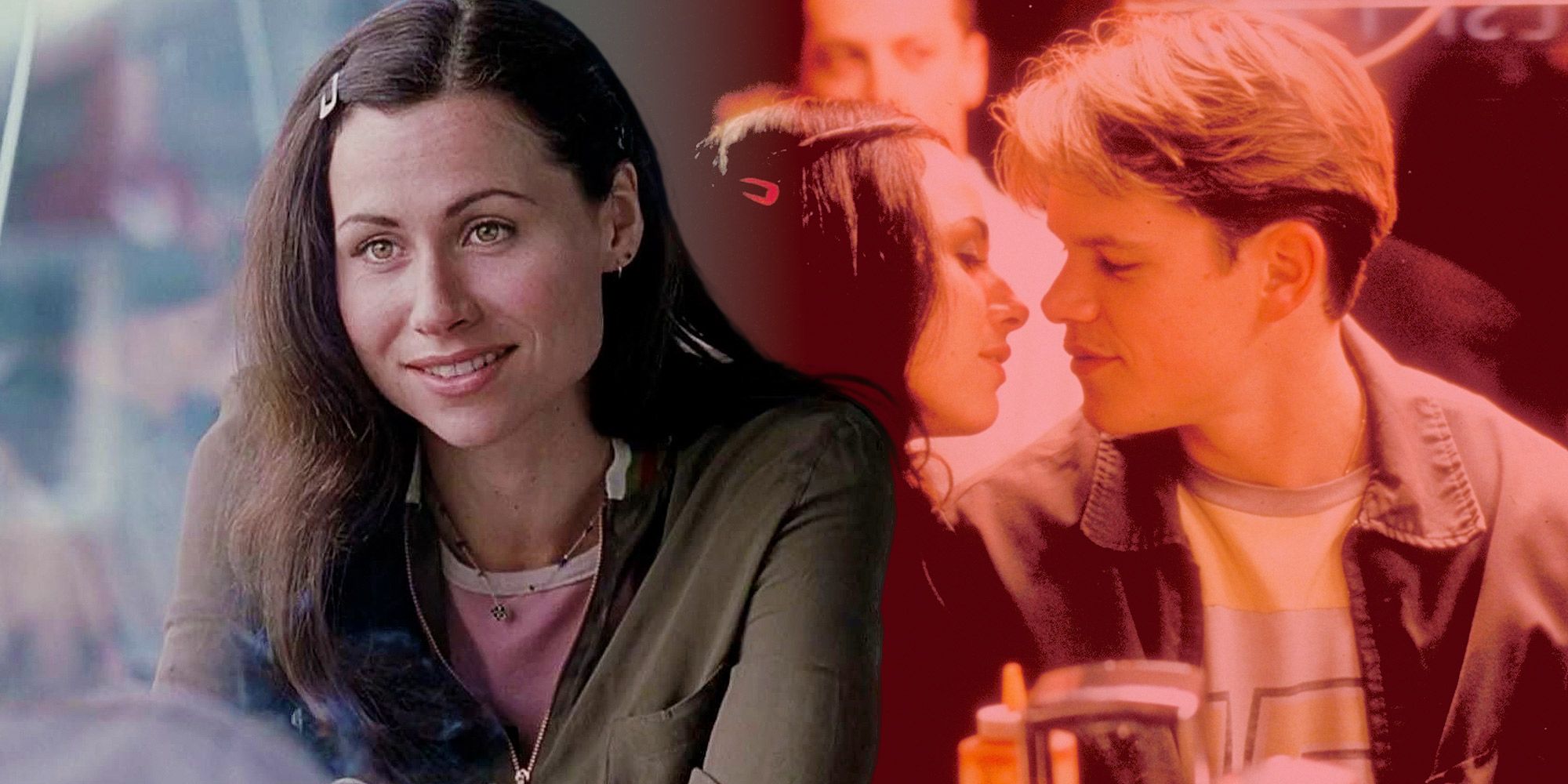
Also, in Good Will Hunting, only after confronting his trauma and shame can he open up to love. Will sabotage his relationship with Skylar. He says, “You’re not perfect” — then breaks it off before she can leave him. We often fear what we most desire — because intimacy requires vulnerability. Dostoevsky’s Underground Man reminds us: the greatest pain may not be rejection, but what we lose when we run from connection out of fear.
2. Humans crave to be unique, even through suffering.
Story: The Underground Man insists his suffering makes him “special,” clinging to misery as proof of uniqueness.
Memory Hook: A man polishing his chains as if they were gold.
example: People who brag about their hardships — wearing suffering like a badge of honor to feel distinct.
Franz Kafka – The Hunger Artist. A man starves himself in public — turning his suffering into performance. When ignored, he withers — not from hunger, but from lack of recognition. He needs his suffering to be seen as meaningful.
In the movie Joker, Arthur Fleck suffers greatly, but also begins to see his suffering as what sets him apart. His alienation mutates into identity, and identity into vengeance.“I used to think my life was a tragedy… but now I realize it’s a comedy.”
3. Self-deception is a core human habit.
Story: Raskolnikov tells himself he killed for “justice” — but deeper down, it was pride.
Memory Hook: A mask cracking, showing a very different face beneath.
Example: Someone insists they’re working overtime “for the family,” when in truth it’s to avoid family conflict.
In Macbeth, Shakespeare says that beneath the ambition is fear, insecurity, and hunger for power. Claims to act on prophecy and destiny.
In the movie Black Swan, in truth, she’s collapsing under suppressed desires, identity conflict, and fear of mediocrity. Nina believes she’s chasing artistic perfection. We deceive ourselves not to hide from others, but to preserve our image of who we wish we were.
4. Pride isolates more than circumstance.
Story: Raskolnikov insists he is “extraordinary” and withdraws from others, even those who would help.
Memory Hook: A man on a throne in an empty room.
Example: Talented people who push others away because they think “no one understands me,” ending up lonely despite admiration.

In the work of Victor Frankenstein – Frankenstein, Pride drives him to play god and isolate himself emotionally, until tragedy overtakes him. Withdraws from family and friends in pursuit of greatness. Highly talented individuals often isolate themselves due to imposter syndrome, ego, or fear of being misunderstood. Pride can whisper: “If I open up, I’ll be seen as ordinary.” Many geniuses, leaders, and artists suffer not from lack of support, but from the inability to receive it.
This reminds me of Sheldon from The Big Bang Theory, as I have watched it 8 times.
5. Shame corrodes identity.
Story: Stavrogin in Demons is consumed by shame over past crimes, leading him to self-destruction.
Memory Hook: A mirror fogged over, so no face can be seen.
Examples: Survivors of mistakes or trauma who define themselves only by shame, unable to see their whole self beyond the wound. Many once-powerful leaders or artists collapse into depression, addiction, or isolation — not simply from public fallout, but from private shame they cannot confront. Think of athletes or politicians who disappear not after failure, but after internal identity collapse tied to moral wounds.
6. Freedom terrifies more than captivity.
Story: The Grand Inquisitor argues people don’t want freedom; they want someone to guide them.
Memory Hook: A prisoner clinging to his bars when the gate is opened.
Example: Employees who dream of quitting but panic when they finally resign, preferring the security of orders.
In the novel & in the Netflix series Brave New World by Aldous Huxley, People live in a painless, controlled society — with no freedom, but also no suffering. Most are happy. True freedom is considered dangerous and undesirable.
In the movie The Matrix, Most people choose the blue pill: the illusion, the comfort, the known. Morpheus asks Neo: “You take the red pill — you stay in Wonderland, and I show you how deep the rabbit hole goes.”
7. Loneliness magnifies cruelty.
Story: The Underground Man lashes out cruelly because isolation has rotted his compassion.
Memory Hook: A starving wolf snapping at its own shadow.
Example: Online trolls who lash out not because they truly hate strangers, but because they are lonely and bitter.
In the book Great Expectations, Miss Havisham by Charles Dickens. Her loneliness mutates into revenge, projected onto others.
In the movie Taxi Driver, His loneliness creates hostility toward society, masked as a desire to “clean up the streets”. Travis Bickle is socially isolated and slowly descends into violent delusion. After being abandoned, she isolates herself — and raises Estella to be cruel, a weapon against men.
8. People desire to be seen truly, yet fear exposure.
Story: Raskolnikov both hides his crime and drops hints, longing for someone to know the truth.
Memory Hook: A lantern hidden under a cloak, leaking light.
Example: Someone secretly hopes their struggles will be noticed — but panics when someone actually asks, “Are you okay?”.
This is the classic Girlfriend Boyfriend scene. There is, I guess, a zillion videos on YouTube about what that woman says vs what they actually mean. We ache to be seen — not just by others, but by someone who sees everything… and stays.
In the Netflix series BoJack Horseman, BoJack acts out destructively, while secretly longing for someone to say: “You’re not just a mess — I still see value in you.”
9. Excessive self-awareness can paralyze action.
Story: The Underground Man overthinks every move until he becomes incapable of acting at all.
Memory Hook: A chess player frozen before the board until the clock runs out.
Example: People who rehearse conversations endlessly in their heads but never make the call, missing opportunities. The classic example is Hamlet – Shakespeare. He thinks himself into stasis
“To be or not to be…”
Hamlet delays revenge, not because he’s cowardly, but because his intellect undermines his will“.
In the movie Inside Out, her inner turmoil makes her withdraw from action until emotional integration restores flow. Riley’s emotions become confused by overprocessing.
10. Humans cling to contradictions instead of resolving them.
Story: Ivan Karamazov both rejects and longs for God, living in contradiction rather than choosing one side. “I got to the point of feeling a sort of secret abnormal, despicable enjoyment… and secretly, inwardly gnawing, gnawing at myself for it, tearing and consuming myself till at last the bitterness turned into a sort of shameful accursed sweetness…”
Memory Hook: A man holding fire in one hand and water in the other, refusing to let either go.
Example: People who complain about their job daily but refuse to leave it — stuck between comfort and misery. Leo Tolstoy, the author of War & Peace & one of the classic writers from Russia, believed in Christian morality, yet was tormented by pride, wealth, and family conflict. Spent his life trying to live simply — but could not escape his own contradictions. He died walking away from his family, still searching for the peace his ideas couldn’t give him.
I guess here Dostoevsky doesn’t condemn contradiction — he shows it as the human condition. Ivan clings to both rebellion and longing, both atheism and spiritual hunger. In that unresolved space lies the tragedy — and the mystery — of the human soul.
Now my opinion:
After reading Dostoevsky, I honestly don’t know how to react to the Russian people. Sometimes I feel pity, because Russia has never truly experienced democracy. Again and again, they end up with some form of dictatorship — from Stalin to Putin. Other times I feel frustrated — because Dostoevsky warned them nearly 200 years ago, and they still haven’t listened. I’m 100% sure — If Dostoevsky were alive today, he would weep at the condition of the Russian people. Their quality of life, when compared to their old enemy America (which is now colonizing Mars), is heartbreaking — Even though it was the Soviet Union that first put a human in space. Today, many of Russia’s brightest minds are leaving the country, moving to the U.S. (Lex Fridman) or elsewhere for a better life. Russia is facing a massive brain drain. I’ve read my fair share of novels, but nothing compares to Russian literature.
It’s just… different.
I only hope that in the future, the Russian people will return to their old wisdom — and begin to truly reform. god bless Russia & the Russian people.
See you in the next one…

